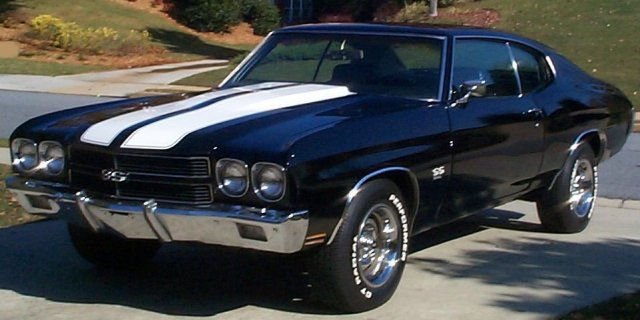
It was the end of the line for General Motors' popular old-fashioned RWD coupes, and it was faster than a Corvette. This last addition of the Buick Regal with the Grand National package including turbocharged V-6 looks almost new. Presumably it's garage-stored when it's not chilling out on the north side of Queen Anne. This car would probably sell for about $50,000.
Friday, August 15, 2025
Monday, July 1, 2024
Old Cars in Fremont
The Fremont neighborhood in Seattle has long since ceased to be affordable for ordinary human beings, but it retains some of its quirky character in the form of a lot of old cars and trucks.
This 1949 Ford F-1 has been nicely restored. That's a pretty nice chrome grill for a working pickup from this era.
The mid-80s Chevy El Camino, still a fairly common sight on the west coast.
This 1976 Datsun 280Z was the first car in the series with fuel-injection. It was way ahead of the dinosaurs Detroit was offering at the time.
1987 Dodge Ram. Far less common that the old Ford and Chevy trucks you see on every block here.
1980 Toyota Celica. One of the few cars from that era that is hard to kill.
And finally, right in front of the Ford F-1, quite a contrast: A 1990 Mercedes 560 SEC. This car cost around $85,000 new. That would be over $200,000 in 2024 dollars.
Friday, November 19, 2021
The Blog Has Reached a Tipping Point: 1987 Suzuki Samurai
Suzuki was selling this vehicle around the world long before it arrived in the US, and still sells it today. It was marketed here from 1985 to 1995; Suzuki pulled out of the US entirely in 2012. We remember the Samurai for Suzuki's lawsuit against Consumer Reports after that organization rated the vehicle as unsafe due to its tendency to rollover in certain situations. The lawsuit was settled, with Consumer Reports not shown to be wrong really, but because they exaggerated the Samurai's problems, sort of.
From Wikipedia, "A Suzuki memorandum dated July 14, 1985, stated: "It is imperative that we develop a crisis plan
that will primarily deal with the ‘roll’ factor. Because of the narrow
wheelbase, similar to the Jeep, the car is bound to turn over." Over the years, over 200 Suzuki Samurai rollover lawsuits have been
settled, and Suzuki's own expert witnesses testified the automaker was
aware of 213 deaths and 8,200 injuries involving Suzuki Samurai
rollovers." "The dispute and eventual lawsuit stemmed from the CR statement easily rolls over in turns,
which CR attributed to the sudden swerve test and was not meant to
generally apply to the Samurai in respect to other tests that CR
undertakes to simulate normal routine driving such as 0-60 mph
acceleration and stopping."
The Samurai's defenders usually say things like, "Hey, it's unlikely that you'll swerve like that, and the the Samurai is no more prone to rollover than other similar SUVs." Reminds me of the old joke:
Patient: "Doctor, it hurts when I do this."
Doctor: "Don't do that."
Wednesday, April 29, 2020
Saturday, January 27, 2018
1987 Toyota Crown Super Salon
Observations:
* Love all the little crown logos unique to this model.
* This Crown is powered by the turbocharged "Diesel Ceramics Power" engine. It will probably run forever.
Thursday, April 13, 2017
1987 Chevrolet Celebrity Eurosport
The Good:
From curbsideclassic.com: "The 1980 X-bodies were by all accounts an unmitigated disaster. Yet they took that very same platform, updated and enlarged it, and turned it into the new A-body, which lasted for fifteen years and by the end, was a relatively well built, reliable car."
The X-bodies were of course the Chevy Citation and its sister models, which were launched to great success that quickly turned into even greater disaster when those cars quickly fell apart and caused many owners to switch to Hondas and Toyotas.
The GM A-body was so successful that it continued to be sold in the form of the Buick Century, without any significant changes, through the 1996 model year.
The Bad:
Platform sharing, the practice of having different brands sell the same basic car, has been around since about 1950. On the surface, that's an efficient way to do business. But to make it work, the brands still have to be easily distinguishable. You can guess, for example, that the 1970 Chevy Chevelle and the 1970 Olds Cutlass were built on the same platform, but they look different enough that you'd never confuse one for the other. The thing about the A-body was that the Chevy Celebrity, the Pontiac 6000, the Olds Ciera and the Buick Century were exactly the same, inside and out. That leads to two problems. Number one, you only need one management team to sell a particular car, whereas GM in this case had four. Number two, it tends to create, (from a 2009 business study of GM), "a huge divisional and cross-divisional replication of cars in many of the market segments," with the outcome being, "GM now competes with itself for market share and cash flow." These days, GM spokesman Jim Burke is admitting that if GM is going to continue to share platforms, they need to work "to differentiate and distinguish the models from the standpoint of exterior and interior design."
Additional observations:
* "Eurosport"? C'mon Chevy, does anything about this vehicle really say, "European sports car"?
* Moss growing on a old car is normal in Seattle. I note that there's a thin line of moss growing on the north-facing side of this car, but not the south-facing side. Presumably it's been parked in this same spot for decades.
* Cars were more expensive in the 80s. In 1985, one of my teachers bought a plain-jane Celebrity and paid $12,000. That's $27,000 in 2017 dollars, $4,000 more than you'd pay for a new base-model Toyota Camry today.